• Request Info
  • Visit
  • Apply
  • Give
  • Request Info
  • Visit
  • Apply
  • Give

Search

Biochemistry & Cellular and Molecular Biology

  • Undergraduate
    • Mentoring
    • Scholarships
    • Courses
    • Honors
    • Career Resources
  • Graduate
    • Admissions
    • Funding
    • Related Programs
    • Program & Curriculum
    • Minor Programs
    • Grad Student Organization
    • Awards & Highlights
  • Research
    • Undergraduate Research
    • Research Areas
    • Facilities and Resources
    • Centers & Partners
    • Faculty Awards
  • People
    • Faculty
    • Post Docs
    • Staff
    • Graduate Students
    • Joint Faculty & Adjunct Personnel
    • Research Personnel
    • Lecturers
    • Emeritus
  • Events
    • Colloquiums
    • Seminars
    • Annual Award Reception
  • Alumni and Friends
    • External Advisory Board
    • Graduate Student Alumni
    • BCMB Newsletter Archive
  • About BCMB
    • Forms
    • Directory
Home » Archives for ljudy@utk.edu » Page 4
Author: ljudy@utk.edu

New Faculty Spotlight: Sarah Shelby
December 1, 2023 by ljudy@utk.edu

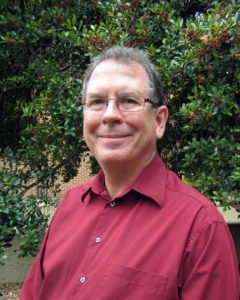
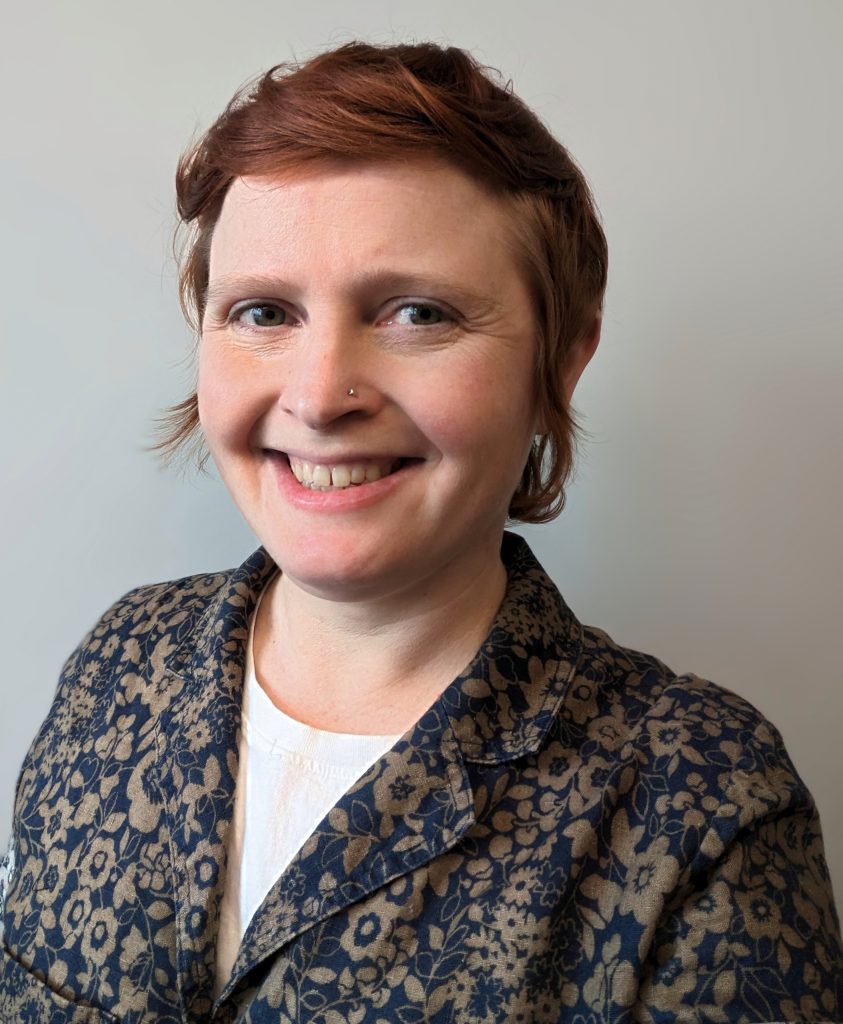
Sarah Shelby headshot

Assistant Professor Sarah Shelby has long been fascinated by biology. 

“Even back in my years as an undergraduate chemistry major, I was a little bit in awe of the complexity found in biological systems, and have been deeply curious about how complex structures in the cell are fundamentally shaped by basic chemical and physical forces,” she said.

Shelby did her PhD at Cornell University, where she took advantage of a new form of fluorescence microscopy called “super-resolution microscopy.” This method can resolve structures in intact cells as small as 10–20 nanometers, which is ten times smaller than what is possible with conventional fluorescence microscopy. The ability to “see” features so small provided access to the inner workings of complex cellular structures like the plasma membrane, and a new avenue to understand how cells sense and respond to cues from their environment.

“I first used this method in my PhD work to image clustering and dynamics of the IgE receptor, which is the immune receptor in mast cells responsible for allergic responses,” said Shelby.

As a postdoc at the University of Michigan she focused on how interactions between lipids organize plasma membrane components, and how membrane organization impacts signal transduction from cell surface receptors. Lipid-lipid interactions are fascinating because even though they tend to be relatively weak and non-specific compared to interactions between proteins, collectively they lead to non-uniform mixing of the “2D fluid” of the plasma membrane, including its constituent proteins. This effectively compartmentalizes signaling biochemistry on the membrane surface in a similar way that organelles compartmentalize different cellular functions.

“Using super-resolution microscopy, I was able to directly image lipid domains around B cell receptors and show that these domains concentrate key receptor signaling partners in a way that promotes signal transduction,” she said.

She is extending this research at UT.

“I am studying a new receptor system, known as Chimeric Antigen Receptors or CARs,” said Shelby. “CARs are part of a new class of immunotherapy treatments where immune receptors are engineered to direct the immune system to fight cancer. I’m very interested to see if we can use what we know about how plasma membrane structure and organization regulates native immune receptors to investigate how CARs trigger immune responses, and even come up with strategies for how CARs can be improved. We will use super-resolution microscopy to visualize CAR signaling interactions in the plasma membranes of live cells during the initiation of the cellular response.”

Since arriving at UT, she has been building a super-resolution microscope. This is an entirely custom instrument and will be put together as a team effort between Shelby and students in the lab.

“The microscope will be our main experimental tool and I’m excited about involving students in the process because this kind of hands-on experience will give them an opportunity to learn how it works from the bottom up,” she said. “This way, we’ll be in a great position to execute on new ideas and applications for super-resolution microscopy, and push the limits of what the technique is capable of.”

Research in the Shelby lab is interdisciplinary and students will use methods based in a variety of fields including cell biology, biochemistry, biophysics, optics and instrumentation, and quantitative image analysis. 

Shelby joined BCMB in February 2023 and is team-teaching BCMB 401 (Biochemistry 1) this fall. Outside the lab and classroom, she is an avid hiker and camper and is looking forward to exploring the Smokies. She also enjoys cooking, gardening, and biking around town.


Filed Under: newsletter

Understanding Brain Development and How It Can Go Wrong

December 1, 2023 by ljudy@utk.edu

Logan Dunn was initially not interested in science.

“I was a teenager who had zero percent interest in science in general,” he said. “After graduating from high school, I chose what I consider to be the best route for someone who had no idea what they wanted to do with their life: the military. I was a medic in the US Army for seven years. After serving four years on active duty, I chose to come home and use the GI Bill to attend college. I initially wanted to go to medical school, but this changed about five weeks into my first semester. My first science class with an associated lab was General Chemistry I, and I loved my time in lab. I developed great relationships with my professors at Pellissippi State Community College.”

After graduating summa cum laude with an AS in biology from Pellissippi State, Dunn transferred to Maryville College to obtain a BS in biochemistry. During this time, he also participated in the Biophysics NSF REU program hosted at Clemson University, where he used confocal, hyperspectral, and multiphoton imaging modalities to evaluate the cellular uptake and biocompatibility of single-walled carbon nanotube imaging probes. 

While at Maryville College his advisor, Professor Angela Gibson—who obtained her PhD from BCMB—suggested Dunn apply to the BCMB graduate program.

“I chose to join BCMB because I felt like BCMB had all of the tools for science,” he said. “I also enjoyed my interviews with faculty during the recruitment process.”

Dunn arrived at UT with an interest in neurobiology.

“As a teenager, my maternal grandmother was diagnosed with Alzheimer’s disease, and this was a progressively horrible experience for my family,” he said. “When I came here to interview for BCMB, I was interested in working with Professor Keerthi Krishnan, who studies a neurodevelopmental disorder called Rett Syndrome. While a different disorder/disease, my perspective is graduate school is a means to an end—meaning we are here to gain the skills and learn the techniques to ultimately go off into the sunset and do the things we really want to do. Professor Krishnan and I hit it off in my initial interview and during my rotation. I really enjoyed my time in the lab as well as the people in it. And here I am 2½ years later in the Krishnan lab.”

Dunn is currently working on purifying a protein, MeCP2, from female mouse brains that is linked to Rett Syndrome. He plans on analyzing MeCP2 for post-translational modifications using mass spectrometry. Studies on neural activity-dependent post-translational modifications are typically carried out on cultured neurons. Carrying out this research in brains will be challenging, but rewarding because it will help to answer what controls Rett Syndrome. Dunn was awarded a prestigious grant from the NSF Graduate Research Fellowships Program to carry out this research. 

“This fellowship has allowed me to focus on research without having to balance time between lab work and teaching,” he said. “Since being awarded the fellowship, I’ve published one first-author paper with a second manuscript in the final stages of publication.”

When not in the lab, Dunn takes care of his Bernese Mountain Dog, two cats, and two Holland Lop rabbits: “All of which I just found out I’m allergic to.”

Filed Under: newsletter

How Cells Store Fat

December 1, 2023 by ljudy@utk.edu

Morgan House originally planned on attending medical school. But, her undergraduate research experience at UT in the lab of Professor Mariano Labrador made her realize she had a passion for research. 

“I have always been interested in science, asking questions, and problem solving,” said House. “As I grew up, I watched many of my family members suffer from cancer and disease. I wanted to help somehow, and I thought that becoming a medical doctor was a way I could make a difference. During undergraduate school, I became aware of other job opportunities in science such as a research scientist. After spending time in my undergraduate research lab conducting experiments and generating data, I realized that going to graduate school would be the best fit for me and my future goals.”

Once she joined the BCMB graduate program, House chose very different areas of research for her rotations: microbiology, plant biology, and cell biology. She ended up joining the cell biology lab of Professor Amit Joshi where she is studying organelle biogenesis from the endoplasmic reticulum membrane. 

“I joined this lab for a few reasons, one being microscopy,” she said. “I really enjoy being able to see what is happening in cells in real time. Another reason I was interested in the Joshi Lab is because of the implications of our research in human health. My research is centered around understanding how cells store fat in the form of lipid droplets using baker’s yeast as the model organism. With obesity and metabolic disorders being major health issues in the US, it is important to understand how excess fat is stored and utilized by the body. I hope that one day my research may have an impact on those suffering from these conditions.”

House recently presented her research at the Federation of American Societies for Experimental Biology (FASEB) Endoplasmic Reticulum conference in Melbourne, Florida. She was asked to give a talk based on her poster and won a best poster award. 

“This experience gave me some new friends and contacts, and furthermore gave me confidence in myself as a researcher,” she said. “One of the best parts of BCMB is the community that we have. I always feel like I have someone to reach out to if I need help with my research or with personal problems. I think we are very collaborative and have a community that feels like a family.”

In her spare time, House enjoys collecting and caring for her houseplants and outdoor plants, playing the piano, and singing. She also loves Vol sports, so you can always catch her watching a game and sometimes attending them.

Filed Under: newsletter

Dan Roberts retires after 36 years at UT

December 1, 2023 by ljudy@utk.edu

Professor Dan Roberts, who arrived at UT in 1987, retired in December of last year. His internationally recognized research program focused on several aspects of plant biology, including the role of calcium signaling, abiotic stress responses, the biology of root nodules, aquaporins and related transporters, and RNA homeostasis. 

Past researchers in his lab note that Roberts was a rigorous mentor who taught them many important lessons on how to be a scientist. As his first lab technician John Cobb (now professor at the University of Calgary) noted, “From a science perspective, I would say I really learned the importance of scientific rigor from Dan and I still carry many lessons from him into how I manage my own lab here in Calgary. I try to channel a bit of Dan when I tell one of my students how things should be done.” 

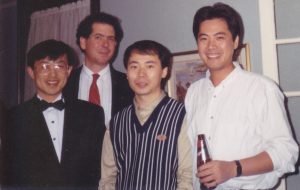
Dan Roberts with early members of the lab.

Roberts was also very active in undergraduate education, in particular taking the lead in designing and implementing core BCMB classes. He is probably remembered by many undergraduates as the instructor of the infamous BCMB 401 (Biochemistry 1) taken by BCMB majors and pre-health students. Roberts made many contributions to our department as a faculty member and department head and in the last few years ran our highly successful, NSF-sponsored research experience for Deaf and hard-of-hearing undergraduates. In retirement he is finishing up several manuscripts from the lab, spending more time with family, and playing the bass guitar. 

Filed Under: newsletter

Message from the Department Head – 2023

December 1, 2023 by ljudy@utk.edu

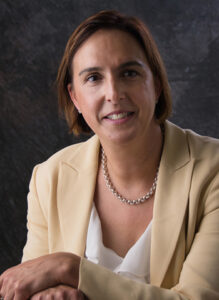
Headshot

Big ideas and the drive to understand the world around us motivate research endeavors. In this issue of the newsletter, we introduce you to several of the big ideas pursued by departmental faculty and their students. You will read about recent findings from some of the groups within the research breadth housed in the department. Basic research paves the way for discoveries that could become solutions to the world’s most pressing problems. Some of BCMB’s researchers’ big ideas that you will read about in this newsletter address the most challenging issues of our times: human health and crop resilience and productivity to meet growing demands for food in a changing climate. I trust reading about ongoing research in BCMB will inspire you to connect with us and share your own big ideas. 

Associate Professor Barrera and his research team have made recent progress deciphering the molecular mechanisms of a virulence factor produced by the fungal pathogen Candida albicans, a peptide aptly named candidalysin. Using single-molecule fluorescence microscopy, a powerful approach to decipher molecular dynamics in biological macromolecules, Assistant Professor Lamichhane’s laboratory is continuing to break barriers in our understanding of molecular mechanisms of GPCR receptors, including understudied representative members of this large group of proteins that are prime pharmaceutical drug targets. Our newly recruited Assistant Professor Sarah Shelby is also using super-resolution microscopy to address lipid-membrane receptors interactions in receptors of the immune system, with this research having broad and potentially transformative applications to human health and the development of new therapies. One example of such application that you will read about below is regarding her plans to characterize Chimeric Antigen Receptors, or CARs, that are considered promising in cancer immunotherapies applications. 

Food is a prerequisite to human health: basic plant biology research can’t be unentangled from human welfare. In this newsletter, you will read about recent findings in Professor Binder’s laboratory and his team that highlight how a plant hormone ethylene, may modulate plant resilience to stress. I also invite you to read about Professor Shpak’s laboratory research that uncovers fundamental mechanisms of plant development that could be used to enhance plant productivity, including fruit production.

I believe that there are no big ideas or research leadership outside of a demonstrated commitment to training the next generation of students, whether they become scientists or not. In this newsletter, you will read about the talented next generation of scientists BCMB is helping train. These include graduate students Morgan House and Logan Dunn, as well as the amazing Amie Sankoh, the first Deaf Black woman to earn a STEM doctorate and graduate from BCMB. 

Last but certainly not least, I want to recognize my colleague and predecessor, Professor Emeritus Dan Roberts, who officially retired from UT and BCMB in December 2022 after over 35 years of outstanding service, including as a department head for 2013-2018. I hope you enjoy reading about Dan’s new hobbies and get in touch with any story you would like to share with us. 

As always: please, keep in touch!

Gladys Alexandre, Professor and Head

Filed Under: newsletter

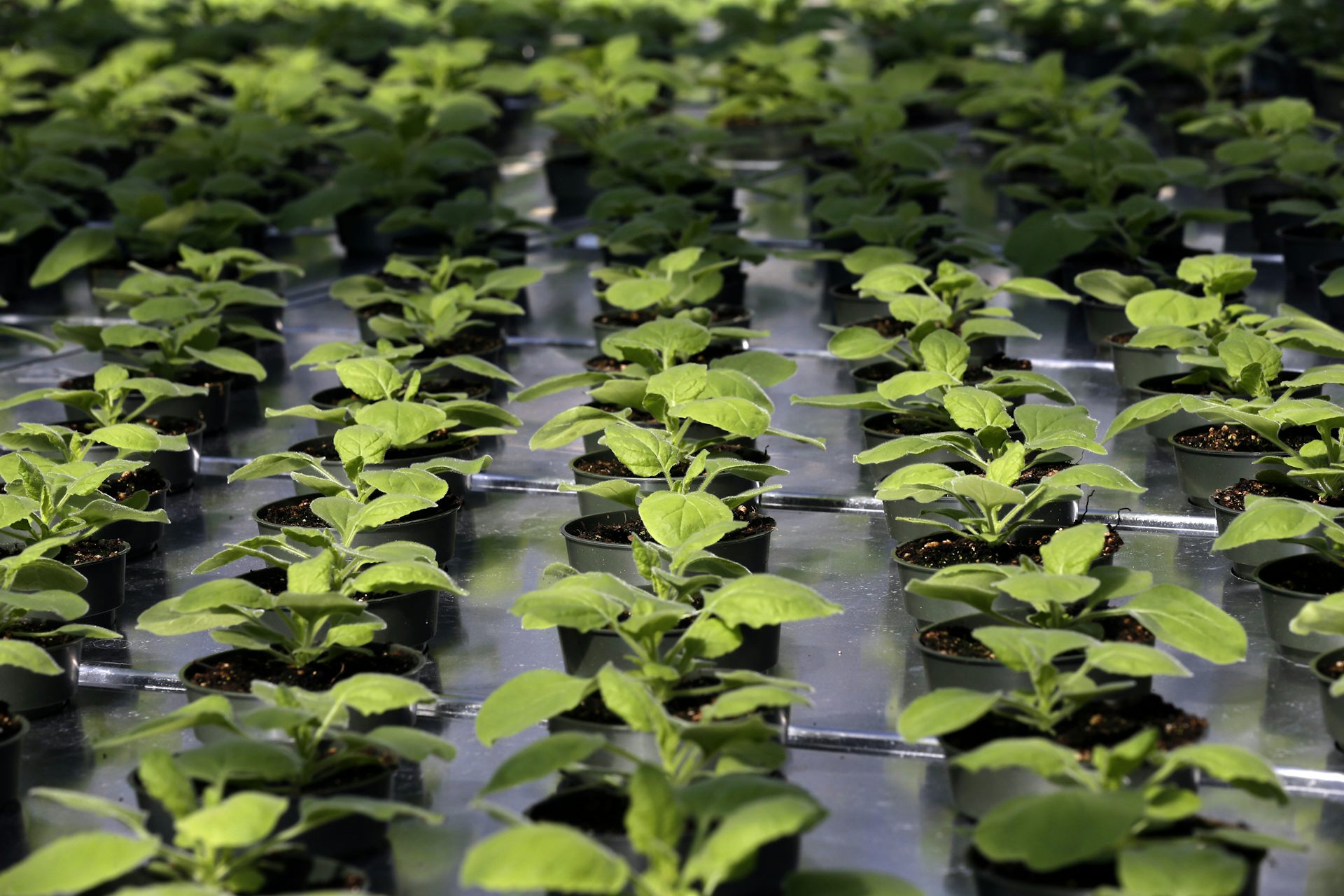
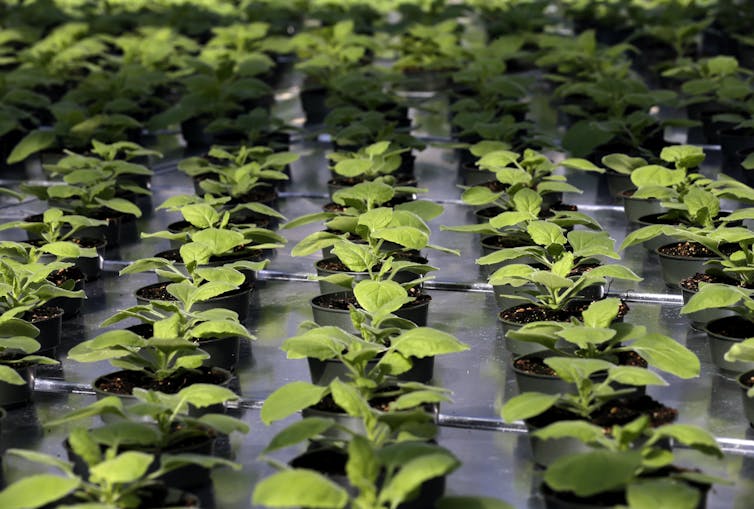
‘Priming’ plants by exposing them to certain chemicals while they’re seeds can affect their growth later in life. AP Photo/Gerry Broome

Brad Binder Published in ‘The Conversation’

November 9, 2023 by ljudy@utk.edu

Exposing plants to an unusual chemical early on may bolster their growth and help feed the world

‘Priming’ plants by exposing them to certain chemicals while they’re seeds can affect their growth later in life. AP Photo/Gerry Broome
Brad Binder, University of Tennessee

Just like any other organism, plants can get stressed. Usually it’s conditions like heat and drought that lead to this stress, and when they’re stressed, plants might not grow as large or produce as much. This can be a problem for farmers, so many scientists have tried genetically modifying plants to be more resilient.

But plants modified for higher crop yields tend to have a lower stress tolerance because they put more energy into growth than into protection against stresses. Similarly, improving the ability of plants to survive stress often results in plants that produce less because they put more energy into protection than into growth. This conundrum makes it difficult to improve crop production.

I have been studying how the plant hormone ethylene regulates growth and stress responses in plants. In a study published in July 2023, my lab made an unexpected and exciting observation. We found that when seeds are germinating in darkness, as they usually are underground, adding ethylene can increase both their growth and stress tolerance.

Ethylene is a plant hormone

Plants can’t move around, so they can’t avoid stressful environmental conditions like heat and drought. They take in a variety of signals from their environment such as light and temperature that shape how they grow, develop and deal with stressful conditions. As part of this regulation, plants make various hormones that are part of a regulatory network that allows them to adapt to environmental conditions.

Ethylene was first discovered as a gaseous plant hormone over 100 years ago. Since then, research has shown that all land plants that have been studied make ethylene. In addition to controlling growth and responding to stress, it is also involved in other processes such as causing leaves to change color in the fall and stimulating fruit ripening.

Ethylene as a way to ‘prime’ plants

My lab focuses on how plants and bacteria sense ethylene and on how it interacts with other hormone pathways to regulate plant development. While conducting this research, my group made an accidental discovery.

We’d been running an experiment where we had seeds germinating in a dark room. Seed germination is a critical period in a plant’s life when, under favorable conditions, the seed will transition from being dormant into a seedling.

For this experiment, we’d exposed the seeds to ethylene gas for several days to see what effect this might have. We’d then removed the ethylene. Normally, this is where the experiment would have ended. But after gathering data on these seedlings, we transferred them to a light cart. This is not something we usually do, but we wanted to grow the plants to adulthood so we could get seeds for future experiments.

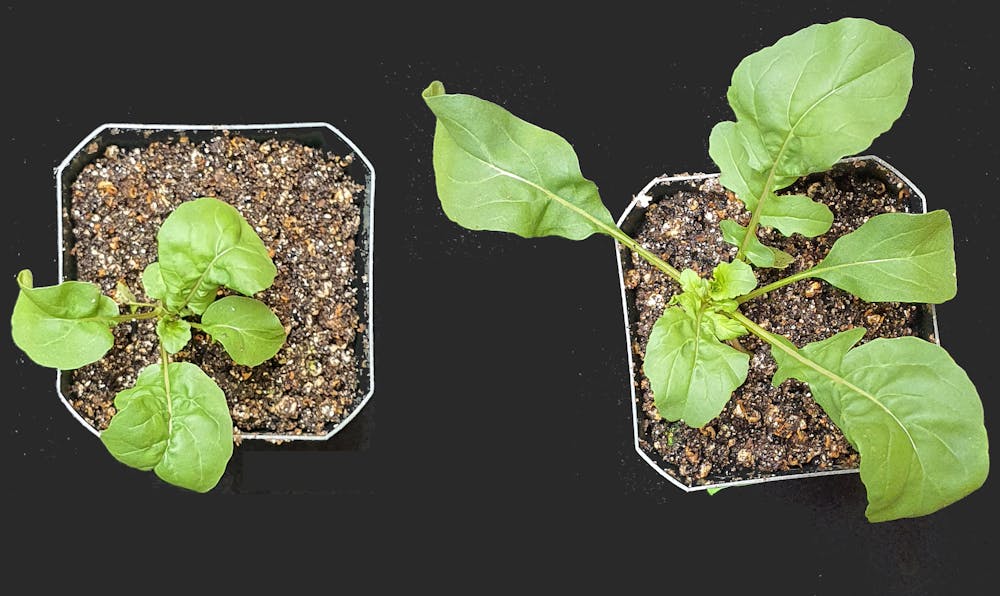
Several days after placing the seedlings under light, some lab members made the unexpected and startling observation that the plants briefly gassed with ethylene were much larger. They had larger leaves as well as longer and more complex root systems than plants that had not been exposed to ethylene. These plants continued growing at a faster rate throughout their whole lifetime.

Two plants as shown from above on a black table. The plant on the left is smaller than the plant on the right.
The plant on the left was not primed with ethylene, while the plant on the right was. Both plants are the same age. Binder lab, University of Tennessee, Knoxville

My colleagues and I wanted to know if diverse plant species showed growth stimulation when exposed to ethylene during seed germination. We found that the answer is yes. We tested the effects of short-term ethylene treatment on germinating tomato, cucumber, wheat and arugula seeds – all grew bigger.

But what made this observation unusual and exciting is that the brief ethylene treatment also increased tolerance to various stresses such as salt stress, high temperature and low oxygen conditions.

Long-term effects on growth and stress tolerance from brief exposure to a stimulus are often called priming effects. You can think of this much like priming a pump, where the priming helps get the pump started easier and sooner. Studies have looked at how plants grow after priming at various ages and stages of development. But seed priming with various chemicals and stresses has probably been the most studied because it is easy to carry out, and, if successful, it can be used by farmers.

How does it work?

Since that first experiment, my lab group has tried to figure out what mechanisms allow for these ethylene-exposed plants to grow larger and tolerate more stress. We’ve found a few potential explanations.

One is that ethylene priming increases photosynthesis, the process plants use to make sugars from light. Part of photosynthesis includes what is called carbon fixation, where plants take CO₂ from the atmosphere and use the CO₂ molecules as the building blocks to make the sugars.

During photosynthesis and carbon fixation, plants take in sunlight and convert it into the sugars that they use to grow.

My lab group showed that there is a large increase in carbon fixation – which means the plants are taking in much more CO₂ from the atmosphere.

Correlating with the increase in photosynthesis is a large increase in carbohydrate levels throughout the plant. This includes large increases in starch, which is the energy storage molecule in plants, and two sugars, sucrose and glucose, that provide quick energy for the plants.

More of these molecules in the plant has been linked to both increased growth and a better ability for plants to withstand stressful conditions.

Our study shows that environmental conditions during germination can have profound and long-lasting effects on plants that could increase both their size and their stress tolerance at the same time. Understanding the mechanisms for this is more important than ever and could help improve crop production to feed the world’s population.The Conversation

Brad Binder, Professor of Biochemistry & Cellular and Molecular Biology, University of Tennessee

This article is republished from The Conversation under a Creative Commons license. Read the original article.

Filed Under: Featured

  • « Previous Page
  • 1
  • 2
  • 3
  • 4

Biochemistry & Cellular and Molecular Biology

College of Arts and Sciences

1311 Cumberland Avenue
309 Ken and Blaire Mossman Bldg.
Knoxville TN 37996-1937

Email: bcmb@utk.edu

Phone: 865-974-5148

The University of Tennessee, Knoxville
Knoxville, Tennessee 37996
865-974-1000

The flagship campus of the University of Tennessee System and partner in the Tennessee Transfer Pathway.

ADA Privacy Safety Title IX