Bruce Serving as Interim Head of BCMB
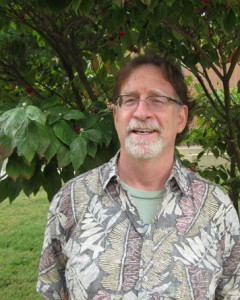
Professor Barry Bruce hopes to guide the department through the next stage of its evolution while preserving the qualities that have allowed it to thrive.
Professor Barry D. Bruce brings more than 30 years of experience at the University of Tennessee, Knoxville, to his role as interim head of the Department of Biochemistry and Cellular and Molecular Biology (BCMB).
“I assume this role at a remarkable point in BCMB’s history,” Bruce said. “The department is larger than ever, with more than 65 graduate students and approximately 600 BCMB majors, supported by an outstanding faculty and staff. My hope is to help make it even stronger.
“My goal is not to reinvent BCMB, but to build on the progress already underway. I want to support the success of our faculty, staff, and students; encourage collaboration and new scientific and educational opportunities; strengthen communication and our shared sense of purpose; and help ensure that BCMB remains a place where talented people want to come, contribute, grow, and stay.”
Bruce joined UT in 1994 as an assistant professor in what was then the Department of Biochemistry and became a BCMB professor in 2006. “I have watched the department grow and evolve considerably,” he said. “Today, I am especially encouraged by our talented and energetic younger faculty—what I sometimes think of as the second wave of BCMB. We have been fortunate to recruit outstanding colleagues, and I hope they will build long, rewarding careers here and develop the same sense of belonging that I have enjoyed.”
The Bruce Lab studies membrane biochemistry related to photosynthesis, with research spanning chloroplast protein import and applied photosynthesis. Bruce is a Fellow of the American Association for the Advancement of Science (AAAS). Forbes recognized him as a “revolutionary” among its “Ten People Who Could Change the World” for his innovations in applied photosynthesis and his pioneering work on “growing electricity.”
Throughout his career at UT, Bruce’s teaching, research, and graduate mentoring have extended across numerous departments and interdisciplinary programs, including current and former programs in cellular, molecular, and developmental biology; plant physiology and genetics; genome science and technology; chemical and biomolecular engineering; food science and technology; and energy science and engineering.
These affiliations have included programs and units within the College of Arts and Sciences, the Tickle College of Engineering, the UT Institute of Agriculture, and the UT–Oak Ridge Innovation Institute. Through these roles, Bruce has contributed to a broad range of scientific and educational communities across the university.
by Amy Beth Miller