• Request Info
  • Visit
  • Apply
  • Give
  • Request Info
  • Visit
  • Apply
  • Give

Search

Biochemistry & Cellular and Molecular Biology

  • Undergraduate
    • Mentoring
    • Scholarships
    • Courses
    • Honors
    • Career Resources
  • Graduate
    • Admissions
    • Funding
    • Related Programs
    • Program & Curriculum
    • Minor Programs
    • Grad Student Organization
    • Awards & Highlights
  • Research
    • Undergraduate Research
    • Research Areas
    • Facilities and Resources
    • Centers & Partners
    • Faculty Awards
  • People
    • Faculty
    • Post Docs
    • Staff
    • Graduate Students
    • Joint Faculty & Adjunct Personnel
    • Research Personnel
    • Lecturers
    • Emeritus
  • Events
    • Colloquiums
    • Seminars
    • Annual Award Reception
  • Alumni and Friends
    • External Advisory Board
    • Graduate Student Alumni
    • BCMB Newsletter Archive
  • About BCMB
    • Forms
    • Directory
Home » Featured » Page 2

Featured

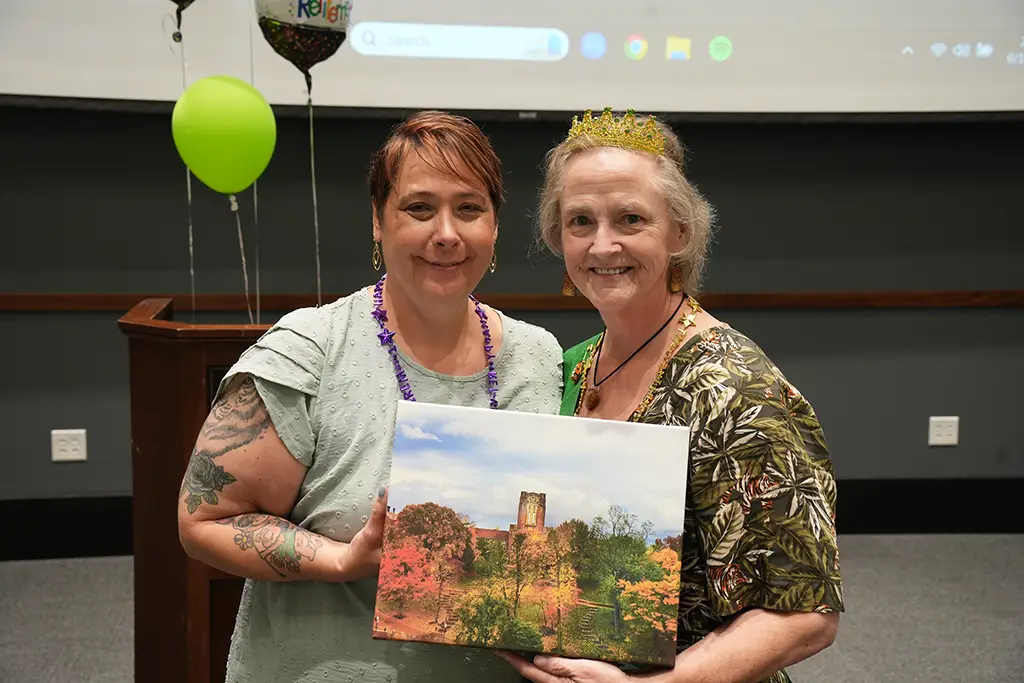
Two women pose together for a photo with a painting of Ayres Hall

Cheryl Hodge Retires after 45 Years at UT

July 2, 2024 by ljudy@utk.edu

Two women pose together for a photo with a painting of Ayres Hall

by Amy Beth Miller

Cheryl Hodge laughed when she received her first paycheck from the University of Tennessee, Knoxville, in 1979. “The silly thing said that I would be eligible for retirement in the year 2021,” she said, and that date was so far in the future she couldn’t imagine it. 

Hodge stayed even longer, retiring at the end of June as an administrative specialist in the Department of Biochemistry and Cellular and Molecular Biology (BCMB).

She started in the Department of Audiology and Speech Pathology, going on to work in the School of Art and in Human Resources as well.

“It is great that her 45-year career at UT allowed her to connect to people and programs as she served the university,” said Beauvais Lyons, divisional dean for arts and humanities and Chancellor’s Professor of Art. “The School of Art faculty and staff adored Cheryl during the decade she worked with us.”  

‘Everything changes’ 

When Hodge started her career, parking on the UT campus was $5 a quarter and she used a manual typewriter. She recalls with excitement when she received an IBM Selectric typewriter, which allowed her to change fonts.

“Everything changes all the time,” she said of working at the university, and she had shown the flexibility to keep up. Hodge took advantage of training through UT and the International Association of Administrative Professionals, also serving in the leadership of the Knoxville chapter.   

Her first responsibility at UT was secretarial, and then she began working with graduate student records. “I was in charge of making sure they were all getting the classes they needed, and keeping all their records; and that was all on paper in filing cabinets, long before computers,” she explained. 

“I’m still very close friends with quite a few of those kids—they’re not kids,” she said with a laugh, noting they are about five years older than she is.

From there she went to the School of Art, working with hundreds of applications for each of the handful of graduate school positions, another role she loved.

Leaving her mark

While in the School of Art she became a member of a UT Employee Relations Committee (ERC). “I got really involved in the fact that this was a place where employees could voice their concerns, could ask for things they felt the university needed,” she explained.

That led to her next position, as principal secretary in UT Human Resources, working with five ERCs and the retirees’ association. “It got to a point in the mid-90s where practically everyone on campus knew my name,” she said. “I loved my years there.” 

She also left a visible impact, the traffic signal at the intersection of Pat Sumitt Drive and Volunteer Drive. After several accidents at the intersection, Hodge put the proposed signal on every committee meeting agenda for more than six years, and she went to Knoxville City Council meetings to advocate for it. 

Now every time they go to a play at the Clarence Brown Theatre, Hodge points and tells her husband, Roy, “See my light!”

What’s next?

When her position in the HR office was eliminated, Hodge found a new family of coworkers in BCMB. 

“She has a love for working with people and helping people,” said BCMB Business Manager LaShel Stevens. “She has a very caring heart.”

Hodge said while her work has been fulfilling, “in every place I’ve been, it’s the people who have kept me.” 

“Loyalty is important,” Hodge said. “Getting into a spot that means something to you and staying is important.” 

After 45 years as a UT employee, Hodge has a clear definition of what being a Volunteer means to her: “someone with a servant’s heart, someone who wants to see the people around them succeed, who wants to make sure that the folks that they work for and with—and even see around—are getting what they need.”

“It means going above and beyond whatever you’re expected to do, to do what needs to be done,” Hodge said.

She has told people that her plan for retirement is “to sit on a pillow and eat bonbons,” but she won’t laze around long. She and her husband, who retired from the UT treasurer’s office in 2005, plan to volunteer at an animal shelter, travel, and take in the sights of Knoxville.

Cheryl also hopes to return to acting in community theatre productions and hiking Mt. LeConte, if she regains the memory and energy that have been lagging since she had COVID.

While she won’t be working on campus this fall, one tradition will continue. She and Roy plan to be selling candy apples this September at the Tennessee Valley Fair, where they first met.

Filed Under: Featured

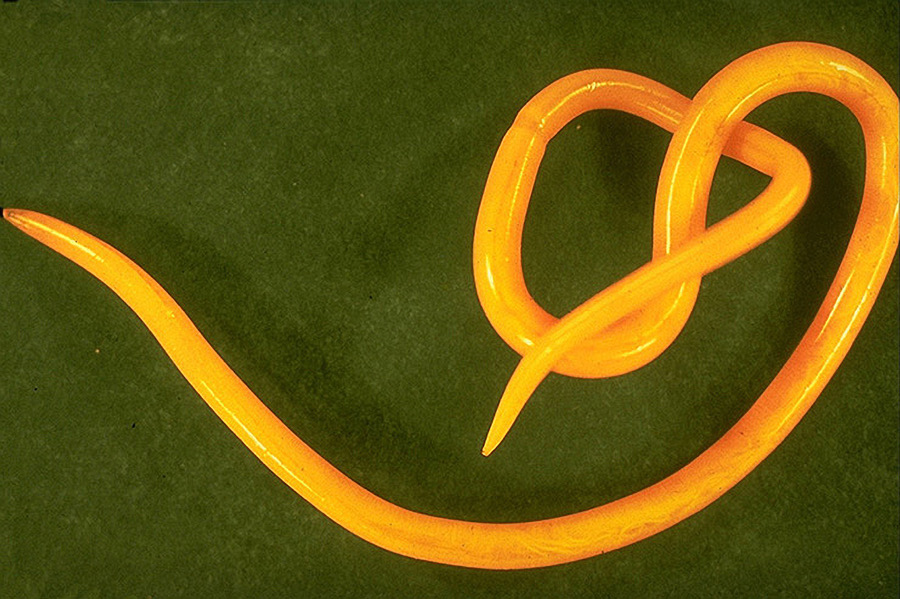
Photo of a nematode

Jianbin Wang Team Publishes on Chromosome Dynamics in Nematodes

June 25, 2024 by ljudy@utk.edu

Photo of a nematode

by Randall Brown

Assistant Professor Jianbin Wang and his lab team in the Department of Biochemistry and Cellular and Molecular Biology focus their studies on the mechanism and function of programmed DNA elimination (PDE).

PDE is a process that violates the paradigm of genome integrity, selectively removing genetic material from the genome. However, hundreds of thousands of diverse species undergo PDE, suggesting that it must have evolutionary benefits.

Wang and colleagues published their most recent findings about PDE in Current Biology this May in an article titled “Chromosome fusion and programmed DNA elimination shape karyotypes of nematodes.” Their findings provide a biological explanation of the different numbers and sizes of chromosomes in various nematodes (roundworms), many of which are parasites of humans and other veterinary animals—enhancing our understanding of genome changes and the potential functions of PDE in these important parasites.

“Maintenance of genomes is essential for the survival and propagation of species,” said Wang. “We found that PDE is an ancient mechanism of genome dynamics—possibly one that was harnessed to sculpt genomes during evolution. PDE may also have been adapted as a way to regulate the expression of genes during reproduction, as many genes and regulatory elements are deleted, permanently silencing them in the somatic cells.”

In the new research, the team looked specifically at nematode karyotypes (a full set of chromosomes) by assembling the full genomes using high throughput sequencing methods and comparing many genomes from diverse nematodes through bioinformatic analysis.

“Chromosome fusion will lead to fewer germline chromosomes,” said Ryan Simmons, a post-doctoral researcher and lead author of the paper for the Wang Lab. “This could benefit the organisms since having fewer numbers of chromosomes may reduce errors generated during meiosis.”

An error such as mis-segregation of the chromosomes can lead to aneuploidy (abnormal number of chromosomes) and other abnormalities, so chromosome fusion can reduce the number of gametes that are not usable. This provides benefits for the overall survival and reproduction of the organism.

In contrast, a benefit of PDE could be to split fused chromosomes in the germline—cells that carry genetic information from one generation to the next—to many smaller chromosomes in the somatic cells.

“Even though these fused chromosomes may be beneficial to meiosis, they may cause problems in gene expression and regulation in the somatic cells and thus need to be removed,” said Simmons. “Thus, nematodes with PDE and chromosome fusions seem to have taken advantage of both the fused germline chromosomes and split somatic chromosomes.”

To learn more about the function of PDE, the Wang Lab looks to create mutant nematodes that do not experience the process.

“Although a nematode that fails to fully stop PDE is yet to be established in the lab, we are working on a free-living nematode model on which we have created several mutants that fail to eliminate some portions of the normally eliminated DNA,” said Wang. His team published about this work in 2022, also in Current Biology. “These mutant worms survived, and their phenotypes are currently being evaluated in the lab.”
Meanwhile, the recently published work by Wang’s team has already been highlighted in a commentary on genome organization by colleagues at the Institute of Human Genetics, CNRS, and University of Montpellier, Montpellier, France.

Filed Under: Featured

Mother And Daughter Professors Forge A Big Orange Family Legacy

May 9, 2024 by ljudy@utk.edu

by Randall Brown

Not everyone starts forming career goals as a toddler, but not every toddler spends time visiting their mother’s parasitology lab.

“I would say, ‘I’m going to work in my mother’s lab—that will be my plan,’” said Rachel Patton McCord, now an associate professor in UT’s Department of Biochemistry and Cellular and Molecular Biology.

It helped her strong early sense of direction that her mother is Professor Emeritus Sharon Patton, who was the first female faculty member in the UT College of Veterinary Medicine (UTCVM) and taught at UT for 38 years.

“I started as a professor at UT in 2016, the year after she retired, so it’s almost like handing off the baton,” said McCord. “I don’t know if there are any other mother/daughter professor pairs at UT. It’s not something I necessarily expected to be possible in my life.”

McCord earned her PhD in biophysics at Harvard University and did postdoctoral research at the University of Massachusetts Medical School before looking for a permanent faculty position. She hoped to find one not too far from her family in Knoxville but didn’t know she would become a “second-generation professor” at Rocky Top.

“Finding academic jobs is not trivial, and you very well may not have the opportunity to work at the same place as your parents,” she said. “But the job came available here to do exactly what I do. It was the opportunity to be back in the place where I grew up, going into my mother’s office and watching what she did as a professor.”

Patton joined UTCVM in 1977, during its inaugural year of classes (the college is currently celebrating the 50th anniversary of its official founding).

“The first time parasitology was taught, I was there to help teach it,” said Patton. “When the first students arrived, I arrived with them—the building was still being built.”

She arrived at UT from the University of Kentucky (UK) more prepared than the average new faculty hire—she had her own collection of example parasites, inherited from her recently retired faculty mentor at UK.

“I showed up with all these bottles of worms, which of course the vet school didn’t have at that time,” said Patton. “It helped that we had all these things through the years. I would say that by the time I retired, we had one of the best collections anywhere.”

She also brought a personalized teaching style to her classes, engaging students in a call-and-response style of participation to convey important principles, something she likens to “an old-time gospel meeting.” She also developed a special end-of-class message of encouragement over the years.

“I would tell them, ‘That’s all for today. Remember, I love you,’” said Patton. “When I first said that I didn’t really mean it—I was just saying it, you know? But as time goes by, you really do love them.”

Her teaching impacted many students over the years, including incoming UTCVM Dean Paul Plummer, who had classes with Patton and earned his DVM at UT in 2000. The impression she made on McCord was, of course, the deepest.

“I always saw how much she loved her students and could impact their lives,” said McCord. “I learned to teach by imitating my mother: when I’m talking in class, the tone of voice I use. I practiced until it became something I could do.”

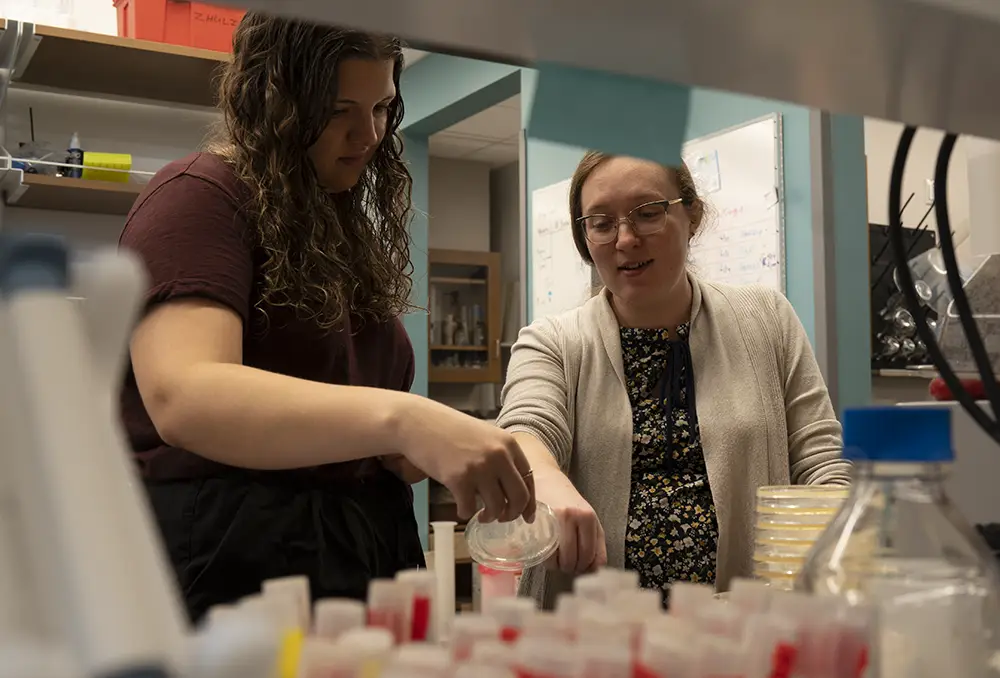
Rachel Patton McCord working in a lab

McCord also absorbed knowledge growing up that helps her in her field, even though her specialty is DNA and human genome structure, not parasitology.

“We have a professor just two doors down the hall who is working on parasites, but more related to what I do,” said McCord. “I’m studying DNA structure, he’s studying DNA in parasites, and in collaborating with him I’m suddenly getting to work with things I heard about growing up—all these words are as familiar to me as some people might be with, ‘Oh, my mother’s cooking,’ or ‘my mother’s quilts.’ I’m like, ‘Oh toxoplasmosis, that sounds so familiar.’”

Patton is happy that she helped connect her daughter to the scientific world, and happy to have McCord continue their family’s teaching legacy at UT. 

“It feels great,” said Patton. “She’s really a good, careful researcher, and a good teacher. Of course, I’m her mother, so I think she’s talented in all respects. But after she’d done her postdoc work and came to UT—it was overwhelming. It was just wonderful.”

In addition to sharing their family bond through UT academics, both mother and daughter proudly say their “blood runs orange.” McCord recalls hearing the Pride of the Southland Band practicing their Vol walk while working on a grant proposal in her first fall semester back on campus.

“You could hear ‘Rocky Top’ through the window, and without even thinking, I jumped up and ran outside,” she said. “It was amazing how it made me feel inspired to go write my grant better. Like, I will give my all for Tennessee today!”

Filed Under: Featured

Photo of Calhoun's on the riverfront

BCMB is Now Accepting Applications for Scholarships, Fellowships and Awards

March 6, 2024 by ljudy@utk.edu

Each spring the BCMB department enjoys gathering for a reception that honors our undergraduates, graduate students, faculty and staff for their excellent work. Thanks to generous donations that have been made to the department, we have been able to offer scholarships and cash awards  to our most outstanding majors, staff and faculty members.

Filed Under: Featured

Research Experience for Undergrads (REU)

February 23, 2024 by ljudy@utk.edu

We are now taking application for the BCMB Research Experience for Undergrads (REU) funded by NSF – through March 31, 2024.

Filed Under: Featured

‘Priming’ plants by exposing them to certain chemicals while they’re seeds can affect their growth later in life. AP Photo/Gerry Broome

Brad Binder Published in ‘The Conversation’

November 9, 2023 by ljudy@utk.edu

Exposing plants to an unusual chemical early on may bolster their growth and help feed the world

‘Priming’ plants by exposing them to certain chemicals while they’re seeds can affect their growth later in life. AP Photo/Gerry Broome
Brad Binder, University of Tennessee

Just like any other organism, plants can get stressed. Usually it’s conditions like heat and drought that lead to this stress, and when they’re stressed, plants might not grow as large or produce as much. This can be a problem for farmers, so many scientists have tried genetically modifying plants to be more resilient.

But plants modified for higher crop yields tend to have a lower stress tolerance because they put more energy into growth than into protection against stresses. Similarly, improving the ability of plants to survive stress often results in plants that produce less because they put more energy into protection than into growth. This conundrum makes it difficult to improve crop production.

I have been studying how the plant hormone ethylene regulates growth and stress responses in plants. In a study published in July 2023, my lab made an unexpected and exciting observation. We found that when seeds are germinating in darkness, as they usually are underground, adding ethylene can increase both their growth and stress tolerance.

Ethylene is a plant hormone

Plants can’t move around, so they can’t avoid stressful environmental conditions like heat and drought. They take in a variety of signals from their environment such as light and temperature that shape how they grow, develop and deal with stressful conditions. As part of this regulation, plants make various hormones that are part of a regulatory network that allows them to adapt to environmental conditions.

Ethylene was first discovered as a gaseous plant hormone over 100 years ago. Since then, research has shown that all land plants that have been studied make ethylene. In addition to controlling growth and responding to stress, it is also involved in other processes such as causing leaves to change color in the fall and stimulating fruit ripening.

Ethylene as a way to ‘prime’ plants

My lab focuses on how plants and bacteria sense ethylene and on how it interacts with other hormone pathways to regulate plant development. While conducting this research, my group made an accidental discovery.

We’d been running an experiment where we had seeds germinating in a dark room. Seed germination is a critical period in a plant’s life when, under favorable conditions, the seed will transition from being dormant into a seedling.

For this experiment, we’d exposed the seeds to ethylene gas for several days to see what effect this might have. We’d then removed the ethylene. Normally, this is where the experiment would have ended. But after gathering data on these seedlings, we transferred them to a light cart. This is not something we usually do, but we wanted to grow the plants to adulthood so we could get seeds for future experiments.

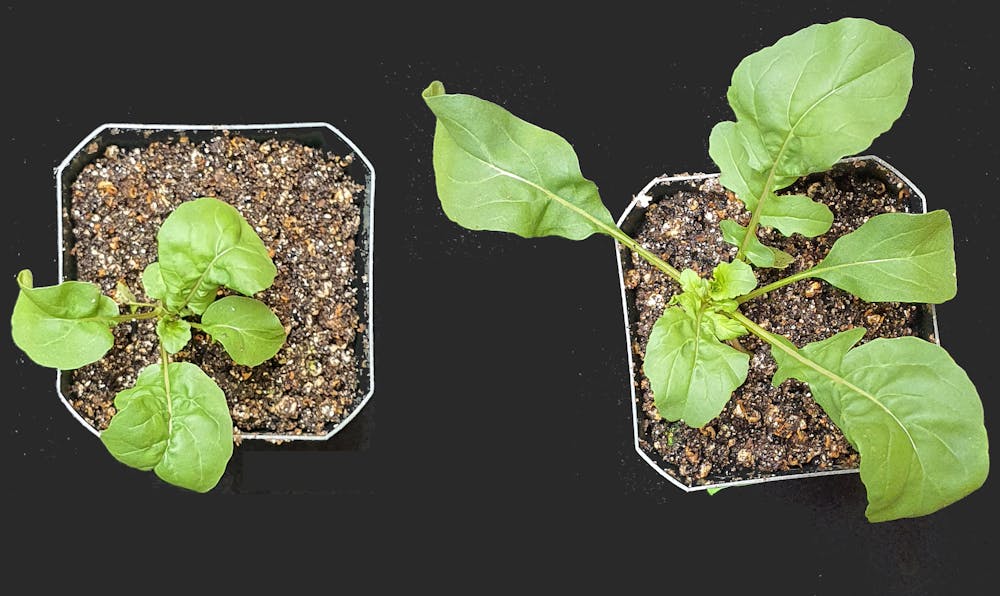
Several days after placing the seedlings under light, some lab members made the unexpected and startling observation that the plants briefly gassed with ethylene were much larger. They had larger leaves as well as longer and more complex root systems than plants that had not been exposed to ethylene. These plants continued growing at a faster rate throughout their whole lifetime.

Two plants as shown from above on a black table. The plant on the left is smaller than the plant on the right.
The plant on the left was not primed with ethylene, while the plant on the right was. Both plants are the same age. Binder lab, University of Tennessee, Knoxville

My colleagues and I wanted to know if diverse plant species showed growth stimulation when exposed to ethylene during seed germination. We found that the answer is yes. We tested the effects of short-term ethylene treatment on germinating tomato, cucumber, wheat and arugula seeds – all grew bigger.

But what made this observation unusual and exciting is that the brief ethylene treatment also increased tolerance to various stresses such as salt stress, high temperature and low oxygen conditions.

Long-term effects on growth and stress tolerance from brief exposure to a stimulus are often called priming effects. You can think of this much like priming a pump, where the priming helps get the pump started easier and sooner. Studies have looked at how plants grow after priming at various ages and stages of development. But seed priming with various chemicals and stresses has probably been the most studied because it is easy to carry out, and, if successful, it can be used by farmers.

How does it work?

Since that first experiment, my lab group has tried to figure out what mechanisms allow for these ethylene-exposed plants to grow larger and tolerate more stress. We’ve found a few potential explanations.

One is that ethylene priming increases photosynthesis, the process plants use to make sugars from light. Part of photosynthesis includes what is called carbon fixation, where plants take CO₂ from the atmosphere and use the CO₂ molecules as the building blocks to make the sugars.

During photosynthesis and carbon fixation, plants take in sunlight and convert it into the sugars that they use to grow.

My lab group showed that there is a large increase in carbon fixation – which means the plants are taking in much more CO₂ from the atmosphere.

Correlating with the increase in photosynthesis is a large increase in carbohydrate levels throughout the plant. This includes large increases in starch, which is the energy storage molecule in plants, and two sugars, sucrose and glucose, that provide quick energy for the plants.

More of these molecules in the plant has been linked to both increased growth and a better ability for plants to withstand stressful conditions.

Our study shows that environmental conditions during germination can have profound and long-lasting effects on plants that could increase both their size and their stress tolerance at the same time. Understanding the mechanisms for this is more important than ever and could help improve crop production to feed the world’s population.The Conversation

Brad Binder, Professor of Biochemistry & Cellular and Molecular Biology, University of Tennessee

This article is republished from The Conversation under a Creative Commons license. Read the original article.

Filed Under: Featured

laboratory experiment

A simple way to boost plant growth and stress tolerance

October 15, 2023 by wpbcmb

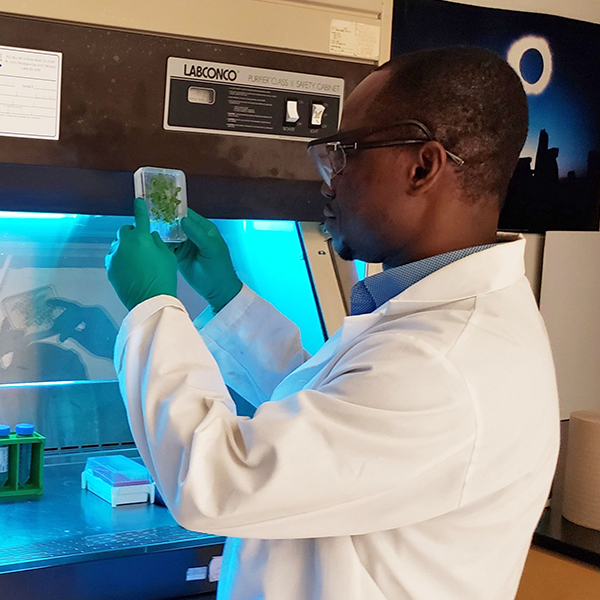
In order to feed an increasing population under more stressful conditions and with less arable land we must increase plant vigor. The Binder lab recently showed that transiently treating germinating seedlings with ethylene boosts photosynthesis and metabolism to increase both growth and stress tolerance. Eric

Brenya, a postdoc in the Binder lab, made the initial observations leading to this research and is the lead author. Esha Dutta, a GST graduate student, as well as several other graduate students from BCMB were involved and this work was a collaborative effort with Dan Roberts. These findings appeared in an article entitled Ethylene-mediated metabolic priming increases photosynthesis and metabolism to enhance plant growth and stress tolerance in PNAS-Nexus.The Binder and Bruce labs have received NSF funding to explore the mechanisms for these effects.

Filed Under: Featured

students and a professor in a lab

Lamichhane Lab Publishes in JBC

October 15, 2023 by wpbcmb

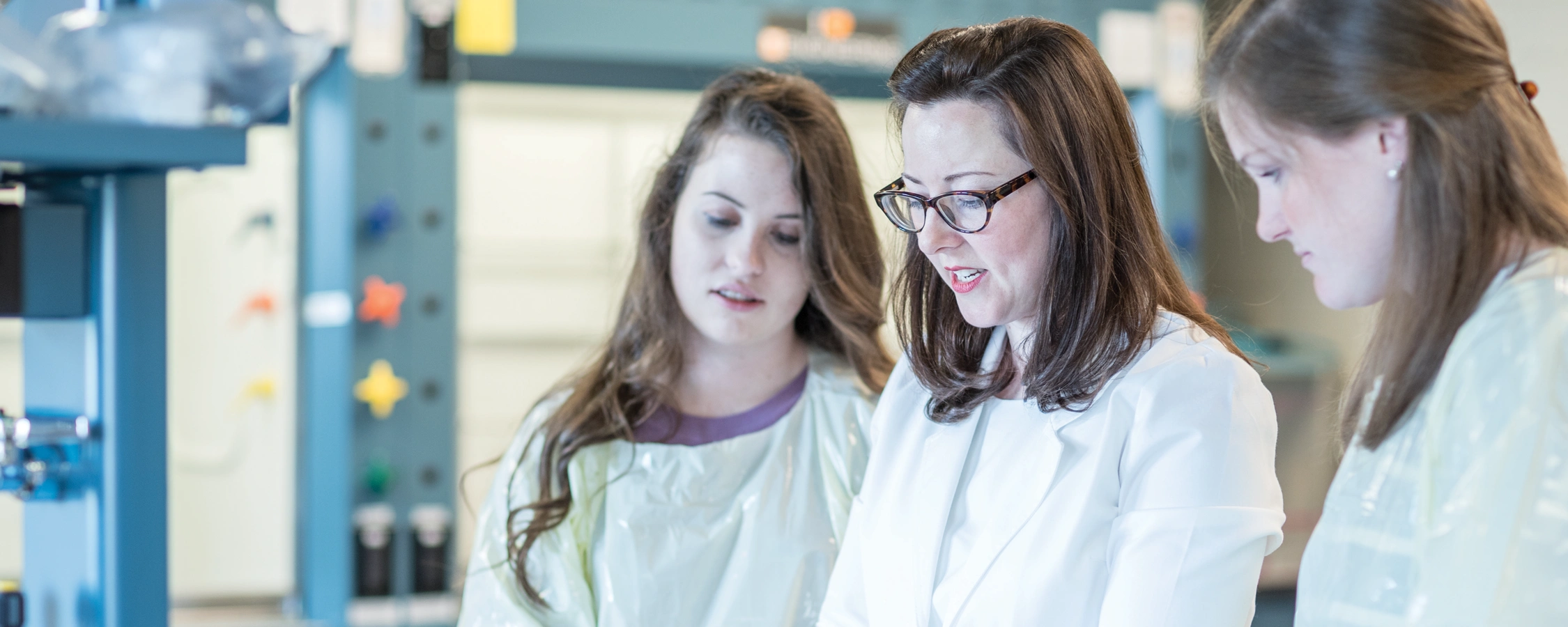
Recent studies from the Lamichhane Lab have revealed the dynamics of the extracellular domain (ECD) of the glucagon receptor (GCGR). The work published in the Journal of Biological Chemistry (JBC) employed single-molecule molecule fluorescence microscopy to demonstrate that the glucagon-bound ECD of the GCGR is dynamic, which was not explored previously. Glucagon is a hormone produced by the pancreas and plays a key role in regulating blood glucose levels, and the GCGR is an important target for treating type 2 diabetes. The first author of the publication is Dr. Ting Liu (former postdoc), and co-authors include a graduate student (Susmiat Khanal) and an undergraduate student Gillian Hertslet.

Filed Under: Featured

a group of faculty members at The University of Tennessee

Postions Available at BCMB

October 15, 2023 by wpbcmb

Two tenure-track Assistant faculty positions are open in BCMB.  

Apply at http://apply.interfolio.com/131930 for an Assistant faculty position in Plant Biology.

Apply at http://apply.interfolio.com/131951  for an Assistant faculty position for Membrane Biochemistry and Biophysics.

Filed Under: Featured

  • « Previous Page
  • 1
  • 2

Recent Posts

  • Multi-Lab Collaboration Unites Math and Biology
  • Fulbright Grant Taking Taylor to Teach in Spain
  • Protein-DNA Research Adds Insights for Human Genetics 
  • First Female Biochemistry PhD Supports Department 
  • Assistant Professor Rajan Lamichhane Featured in Biophysical Society Newsletter

Recent Comments

No comments to show.

College of Arts & Sciences

117 Natalie L. Haslam Music Center
1741 Volunteer Blvd.
Knoxville TN 37996-2600

Phone: 865-974-3241

Archives

  • October 2025
  • July 2025
  • May 2025
  • March 2025
  • December 2024
  • November 2024
  • July 2024
  • June 2024
  • May 2024
  • March 2024
  • February 2024
  • December 2023
  • November 2023
  • October 2023

Categories

  • Featured
  • newsletter

Copyright © 2025 · University of Tennessee, Knoxville WDS Genesis Child on Genesis Framework · WordPress · Log in

Biochemistry & Cellular and Molecular Biology

College of Arts and Sciences

1311 Cumberland Avenue
309 Ken and Blaire Mossman Bldg.
Knoxville TN 37996-1937

Email: bcmb@utk.edu

Phone: 865-974-5148

The University of Tennessee, Knoxville
Knoxville, Tennessee 37996
865-974-1000

The flagship campus of the University of Tennessee System and partner in the Tennessee Transfer Pathway.

ADA Privacy Safety Title IX